Scott Bollt

Postdoctoral Researcher in Aerospace Engineering

California Institute of Technology

Experimental vortex dynamics & control · Real-time PIV & flow sensing · Agentic experimental research augmentation

Seeking faculty positions starting Fall 2027

Scott Bollt

About Me

I am a postdoctoral researcher in the Lynn Booth & Kent Kresa Department of Aerospace at the California Institute of Technology, working in Professor Morteza Gharib's laboratory. I recieved my M.S. and PhD in Aeronautics at the California Institute of Technology, also under Mory's tutelage. I received my B.S. from the Sibley School of Mechanical and Aerospace Engineering at Cornell University, where I was advised by Greg Bewley.

My work sits at the intersection of precision flow sensing, high-performance computing, and unsteady flow physics, vortex dynamics, and feedback control. One thread of my PhD investigated the vortex dynamics and fluid forces produced by perforated plates upon starting motion, combining tow-tank experiments with analytical vortex models. Another thread is RapidPIV, an ultra-fast Particle Image Velocimetry system that leverages the NVIDIA Optical Flow Accelerator to achieve accurate and robust full-field flow velocity measurement in real time at over 1000fps. My current research brings these efforts together, using real-time flow sensing to enable closed-loop feedback control of the leading-edge vortices that typically signify the inception of stall.

Education

  • Ph.D. Aerospace Engineering
    California Institute of Technology
    2021 – 2026
  • B.S. Engineering
    Cornell University
    2016 – 2021

Fellowships

  • NSF Graduate Research Fellowship
  • NDSEG Fellowship (offered, declined)

Research Vision

My long-term research program centers on three interconnected themes:

Vortex Feedback Control

Closed-loop control of free vorticity, such as leading-edge vortices for active stall suppression, enabled by real-time flow sensing. I envision building out this emerging technique to work on fixed wing aircraft, rotorcraft, cars and trucks, wind turbines, and many other transport vehicles.

Real-Time Flow Sensing at Scale

Bringing kHz-rate dense velocity measurement to every lab, and out onto industrial and field settings, enabling flow-aware autonomy, interactive flow visualization, and real-time experimental optimization.

Agentic Experimental Research Augmentation

Even in cutting-edge research, 99% of a researcher's time is spent solving problems others have already done so many times before. Agentic tools allow the corpus of existing knowledge and capabilities to be traversed with exceptional speed, allowing much more human time to be spent exploring the frontier and enabling researchers to accelerate their ability to draw on the achievements of other fields.

Highlights

APS DFD Gallery of Fluid Motion Submission (2025)

Perforated Plate Wakes Upon Starting Motion

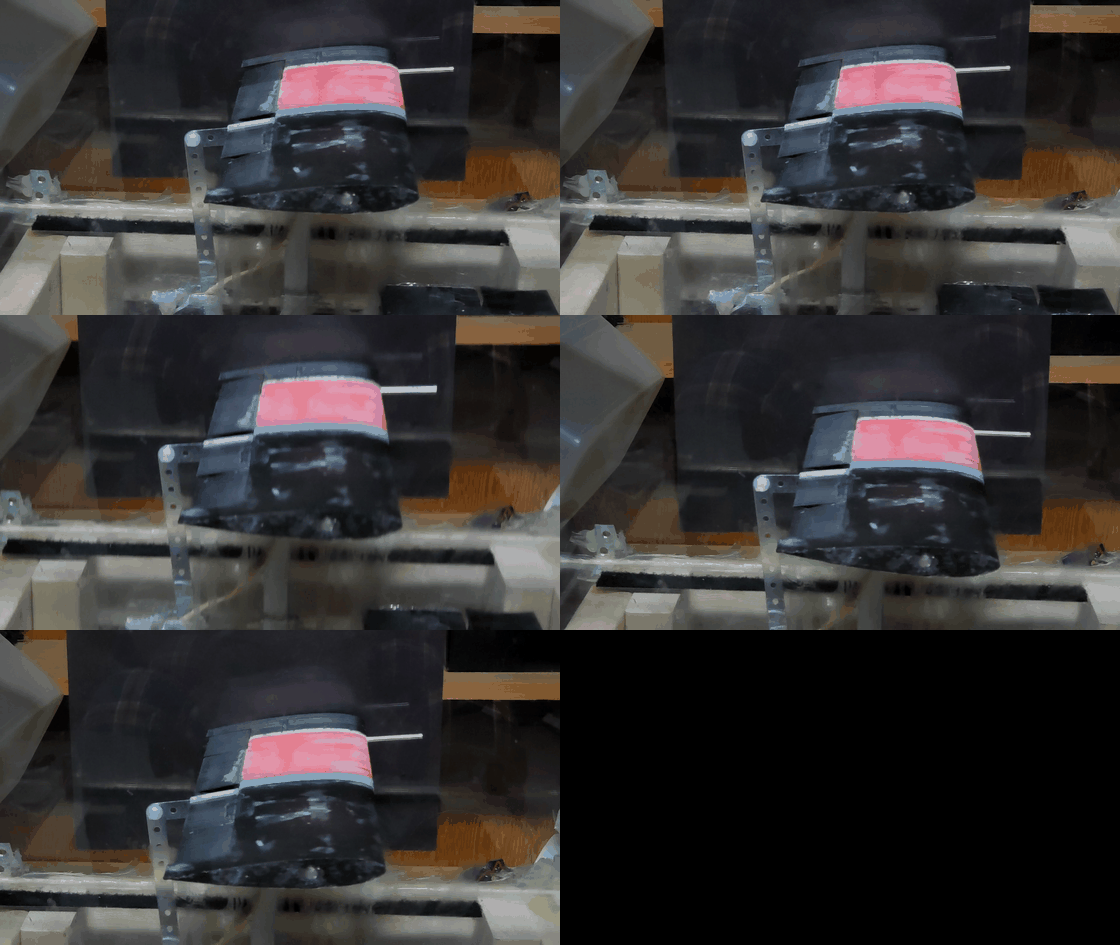
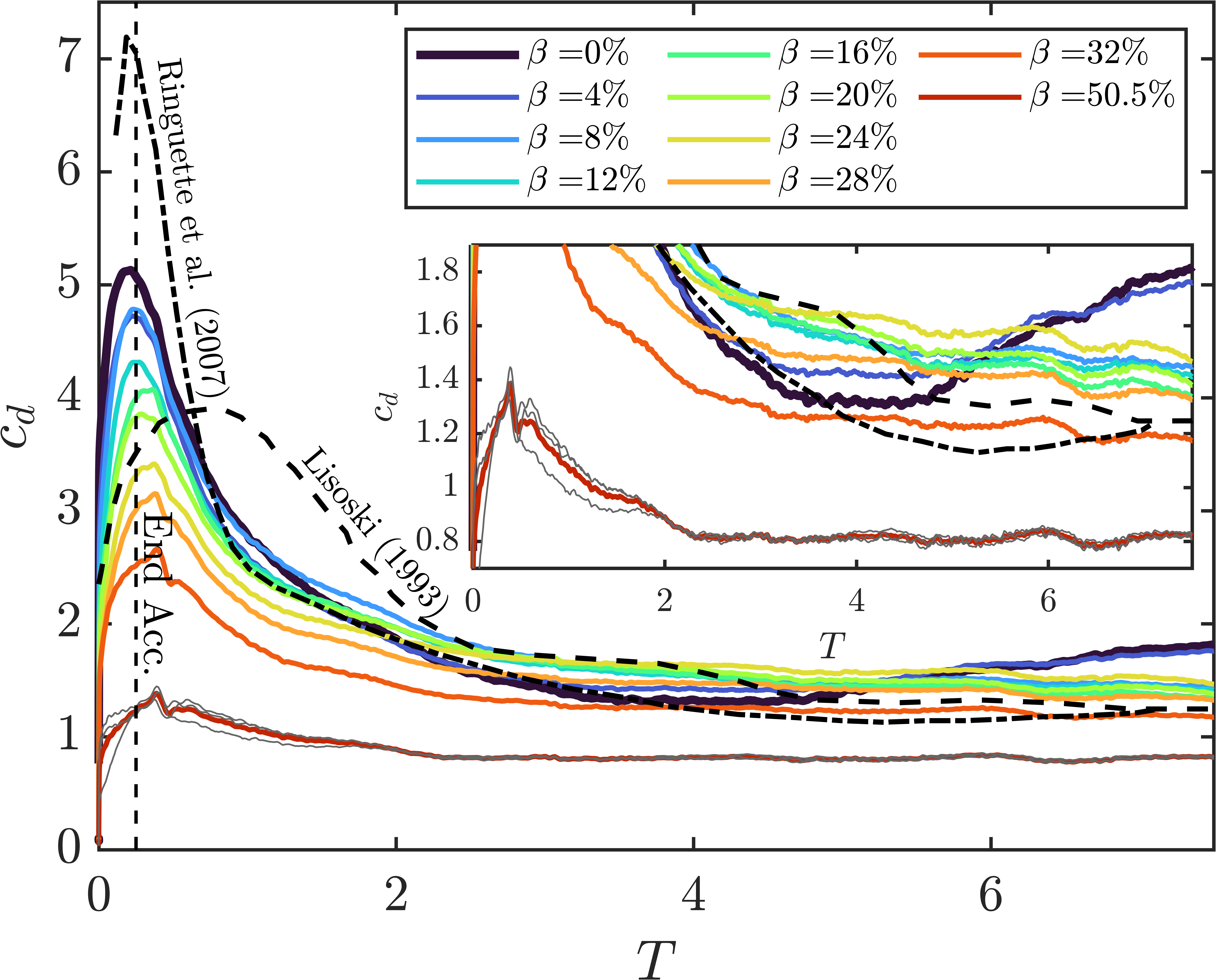
We study the flow and drag generated by a perforated plate set in motion up to a formation time of 8 using a tow-tank. The effect of open area fraction on the vortex dynamics causes a slow transition between a solid plate's tight vortex-rollup behavior and a highly perforated plate's weak shear-layer behavior.

This change corresponds to suppression of the initial drag peak and subsequent drag undershoot. Paradoxically, this results in a region of time where adding holes increases drag. We close Inoue's porous plate vortex model by leveraging a modification of small-time self-similar vortex dynamical theory introduced by Rott.

Drag coefficient vs. formation time for various perforation levels
Drag coefficient vs. formation time across perforation levels
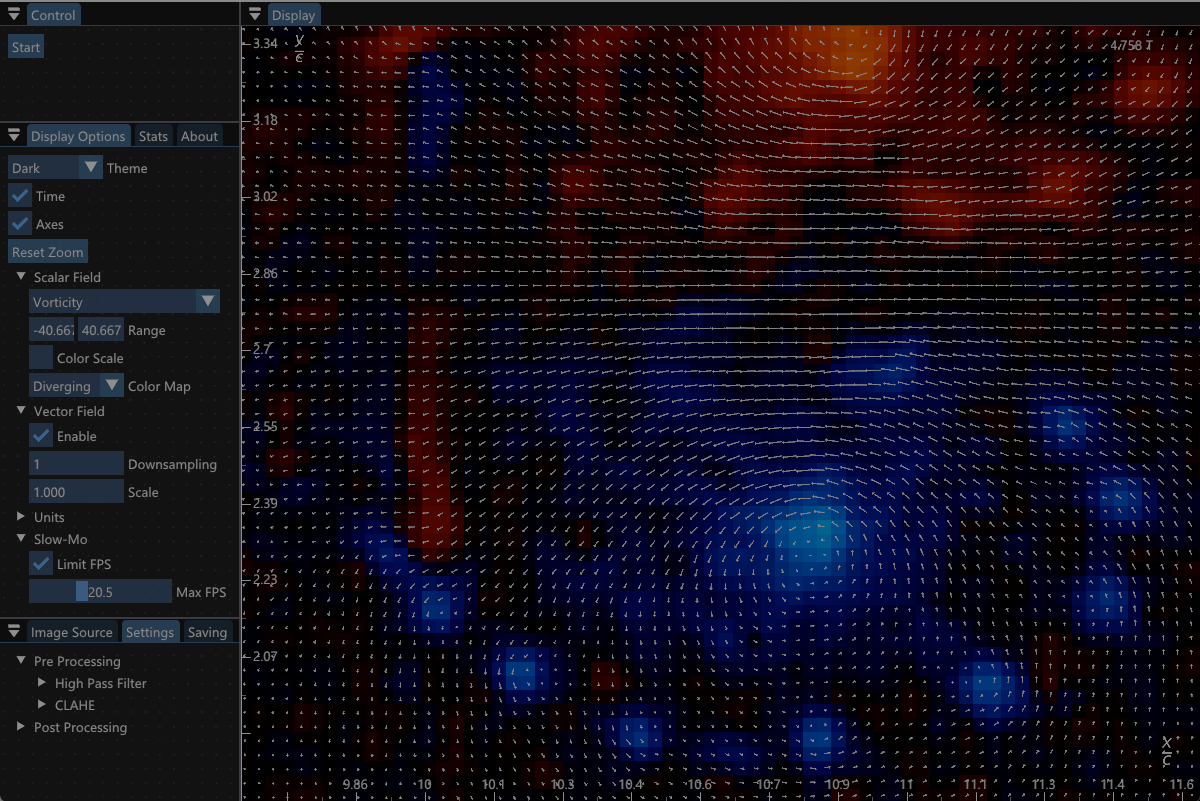
RapidPIV software interface

RapidPIV real-time flow visualization interface

RapidPIV: Ultra-Fast PIV Software

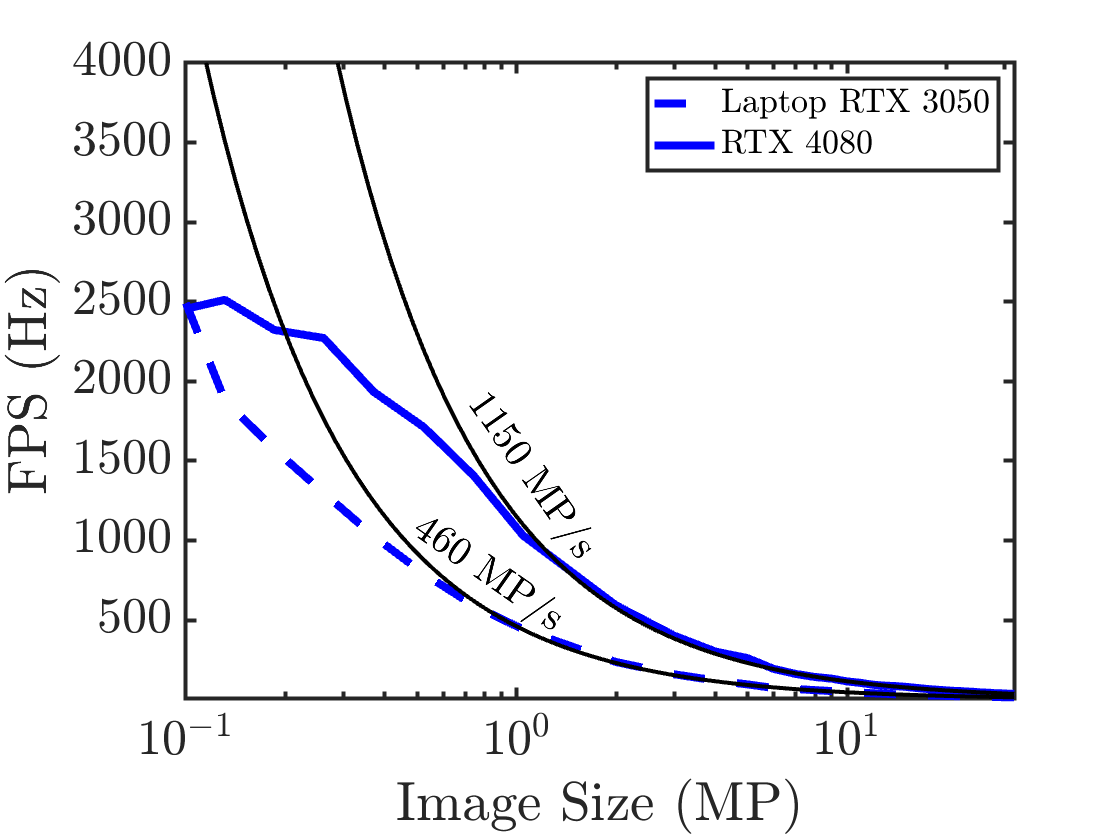
Traditional PIV software is accurate and robust but slow, often taking hours or days for large datasets. Existing real-time PIV methods trade accuracy and robustness for speed. RapidPIV closes this gap: by leveraging the NVIDIA Optical Flow Accelerator (NVOFA), a dedicated hardware block on modern NVIDIA GPUs, it achieves accuracy and robustness approaching that of traditional methods in most conditions, while producing dense velocity fields at over 1,000 fps on 1-megapixel images, substantially faster than previous real-time PIV methods, enabling real-time display and closed-loop flow control.

RapidPIV throughput: frames per second vs. image size on different GPUs
RapidPIV throughput across image sizes on laptop and desktop GPUs
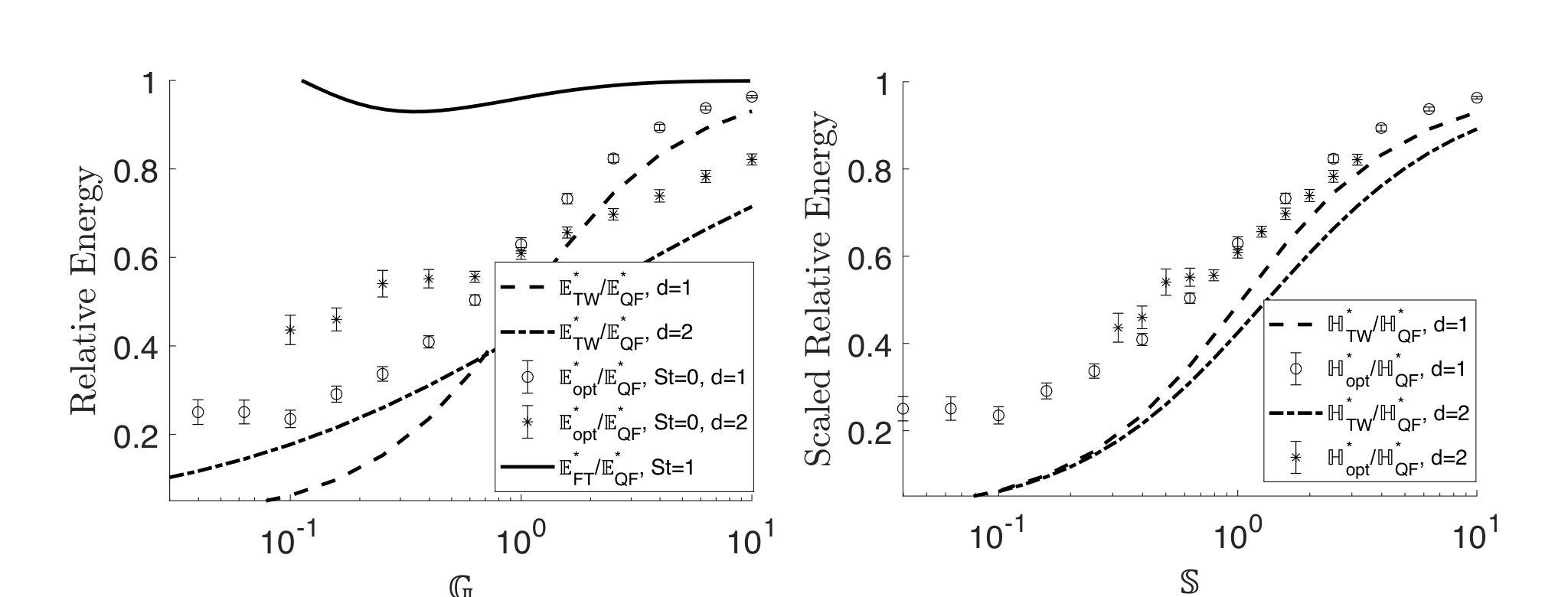
Tailwind turbulence energy bound

Energy bound framework for turbulence-assisted transit

Tailwind Turbulence

Building on earlier work on extracting energy from turbulence in flight, this paper establishes a lower bound on the energy available from turbulence via path optimization for vehicles moving horizontally whose weight is offset only by thrust and/or buoyancy. We test this bound in Kraichnan’s model of turbulence, providing a theoretical framework for understanding the physics of how path optimization can yield substantial energy gains to fish and quadcopters alike.

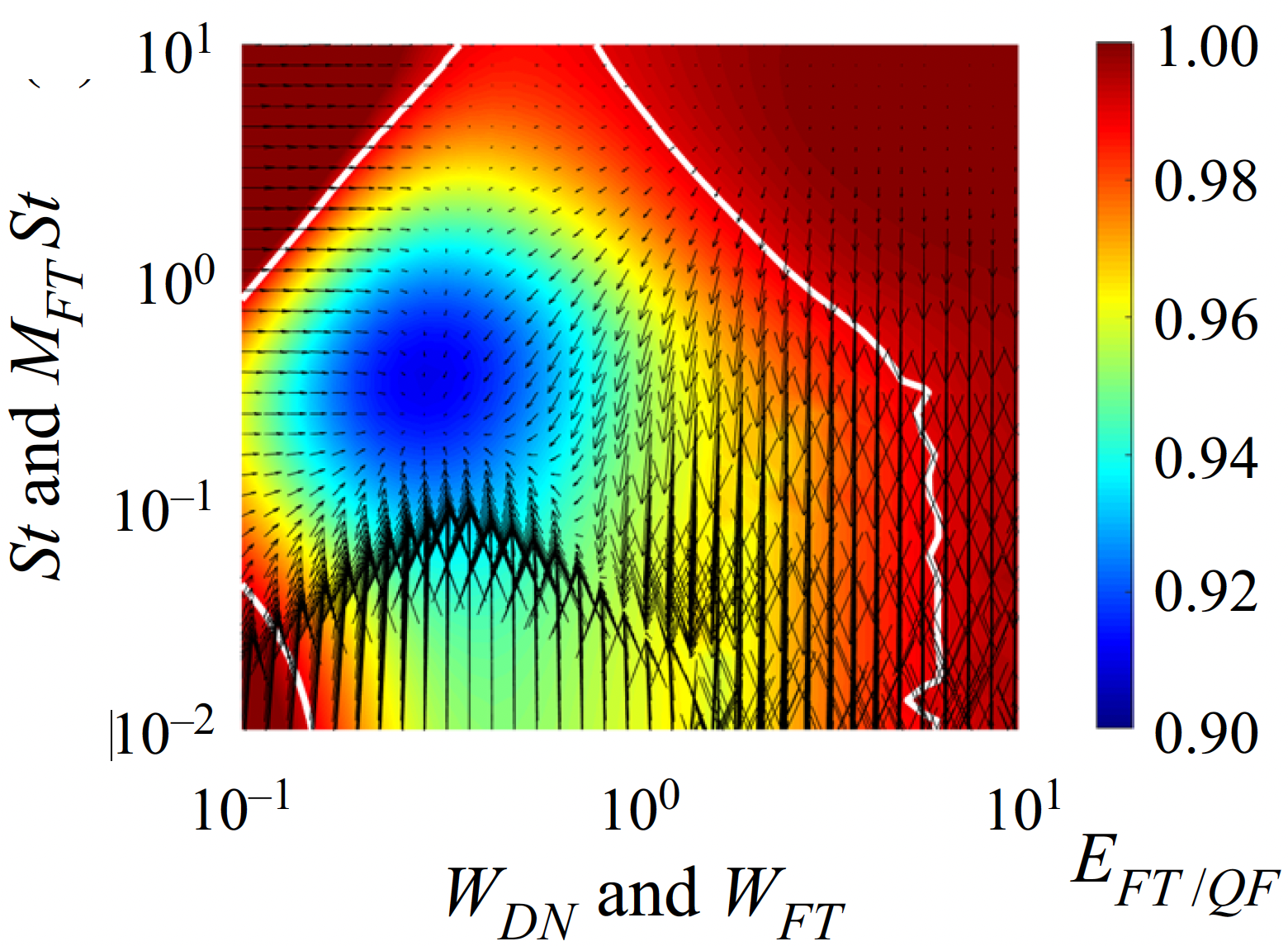
Energy landscape for fast-tracking particles in turbulence

Energy cost of fast-tracking flight relative to quiescent conditions

Particle Fast-Tracking for Path Optimization in Turbulence

Small particles with the right inertia settle through turbulence faster than they would in still fluid because they naturally oversample tailwinds relative to headwinds, a phenomenon known as fast tracking. A flight vehicle that mimics the dynamics of such a particle can find energetically favorable paths through turbulence without any knowledge of the surrounding flow field. We show that this simple strategy yields energy reductions of up to ~10% and mean speed increases of up to ~40% relative to flight through quiescent air.

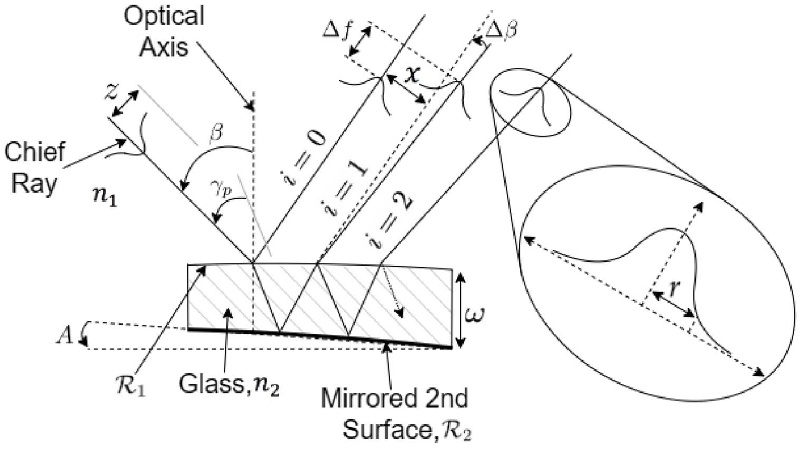
Time-of-flight anemometer optical layout

Displacement plate-beamsplitter optical configuration

Low-Cost Laser Anemometry

Originating from a laser anemometer I invented in high school and validated as an undergraduate, this work presents a time-of-flight anemometry technique that takes advantage of the second-surface “ghost beams” generated by float-glass mirrors, reflections that are usually a nuisance in precision optics, to split a single laser beam into two exactly parallel, closely spaced beams (angular error on the order of arc-seconds). Because the method is achromatic, it works with inexpensive laser sources, keeping the entire setup compact and low-cost while enabling precise, non-intrusive velocity measurements.

Publications & Talks

Invited Talks

  1. Starting Flows, and Ultra-Fast PIV Software
    University of California, Irvine, Department of Mechanical and Aerospace Engineering
    2026

Journal Publications

  1. Loading publications...

Conference Presentations & Proceedings

  1. Loading publications...

Patents

  1. Loading patents...

Teaching

I am prepared to teach courses in experimental fluid mechanics, aerodynamics, theoretical and applied vortex dynamics, measurement techniques, and scientific computing. My experience mentoring undergraduates, and TA'ing graduate and undergraduate classes, is where my commitment to principles-first but hands-on and project-focused pedagogy, began.

Courses I Can Teach

  • Experimental Fluid Mechanics
  • Aerodynamics
  • Flow Measurement Techniques
  • Scientific Computing

Live Demos

Interactive demonstrations of fluid mechanics concepts.

People

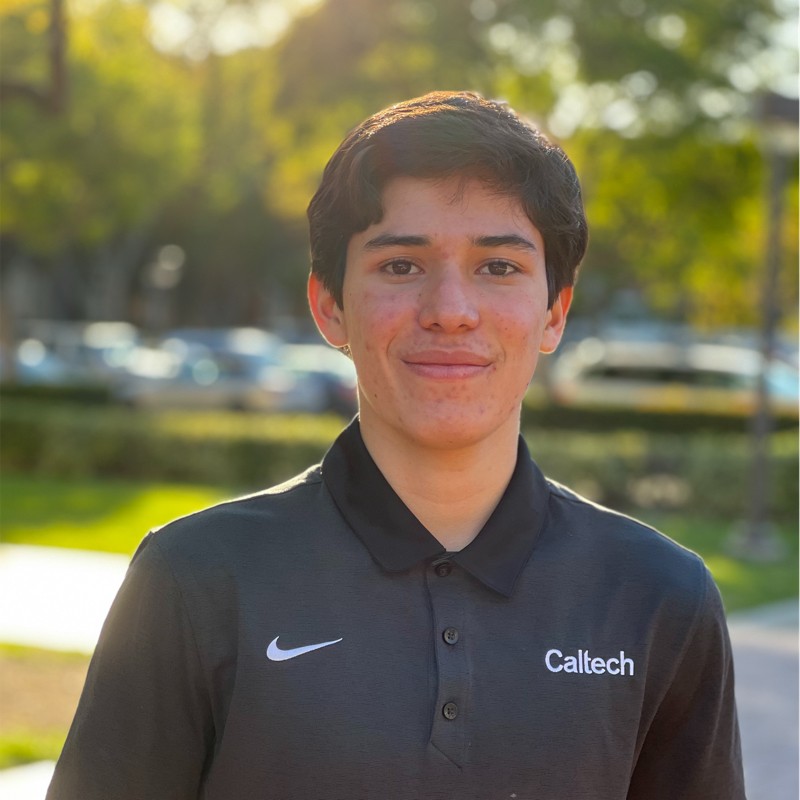
Scott Bollt

Scott Bollt

Postdoctoral Researcher

Caltech Aerospace Department, Gharib Group

Undergraduate Researchers

Sam Foxman

Sam Foxman

Undergraduate Researcher (2023 – 2026)

Caltech CS · Co-developer of RapidPIV · GPU-accelerated flow measurement

Hertz Fellow · NSF Graduate Research Fellow

Next: Stanford Aerospace

Sebastian Banuelos

Sebastian Banuelos

SURF 2023

Caltech Mechanical Engineering · PIV experiments · Perforated plate frame design

If you are an undergraduate at Caltech interested in experimental fluid mechanics or real-time measurement systems, feel free to reach out.

Personal

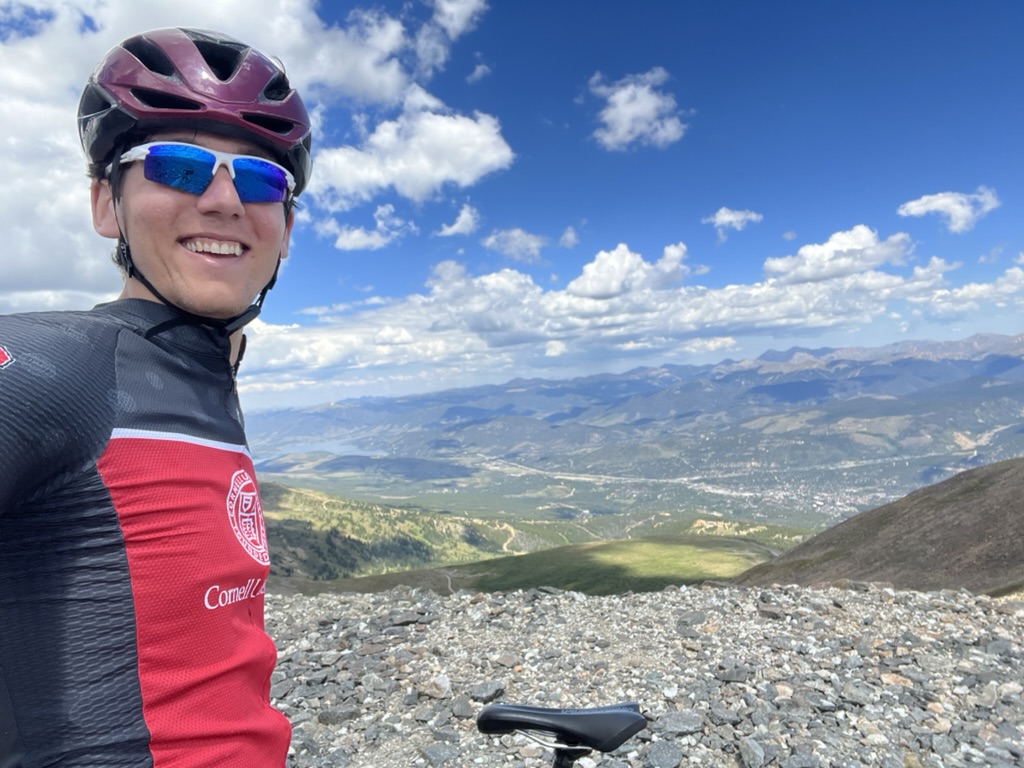
At the top of Peak 10 above Breckenridge, CO

At the top of Peak 10 (13,000ft) above Breckenridge, CO. The views were breathtaking...

Cycling & The Outdoors

Growing up in rural upstate NY, I had a lot of access to nature, open roads, and cold winters. I have tried my hand at swimming, rowing, running, hiking, and nordic skiing, but my true love is cycling. I find it to be the perfect compromise between access to tranquil places, and ability to traverse distance; “smelling the roses” and “wind-in-your-hair” all at once. Sometimes I like to compete, but usually I am just “out there to produce data,” which is recorded to the social media platform Strava.

Contact

Address California Institute of Technology
1200 E. California Blvd.
Pasadena, CA 91125

Scientific Beginnings

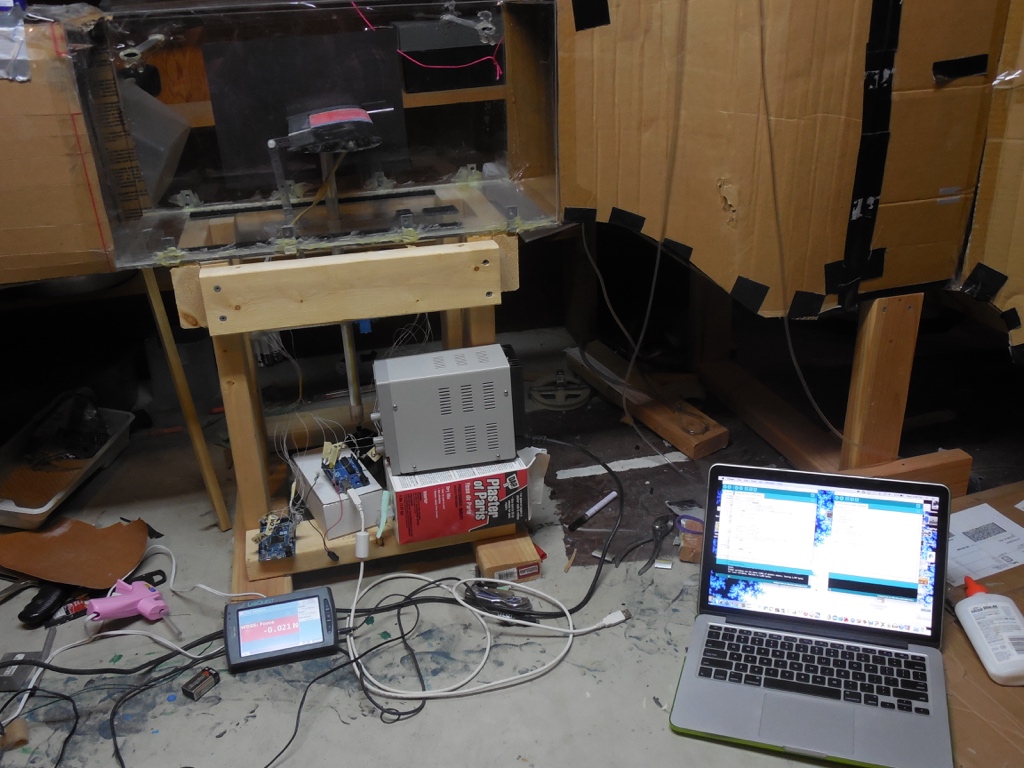
I got into aeronautics early. I did not enjoy loud noises but still wanted to watch high-performance aircraft in flight whenever I could. In high school I built a laser anemometer and a subsonic wind tunnel from cardboard scraps, plastic straws, and box fans, which I used for science fair projects. The anemometer used a displacement plate-beamsplitter to perform time-of-flight anemometry, though I wouldn't fully understand the technique until later. I validated it as an undergraduate at Cornell and eventually published in Measurement Science and Technology in 2023 while a graduate student.

Along the way I competed at ISEF a few times and was a semifinalist at the Intel Science Talent Search. More than anything, those years of tinkering got me excited about experimental design and gave me a healthy fear of, and respect for the power of, computer programming.

Scott Bollt with his high school wind tunnel
The low speed wind tunnel facility in my childhood basement
Wind tunnel flow visualization
Feed-forward flap control to suppress gusts. I hoped it would make me less sick when flying someday.